

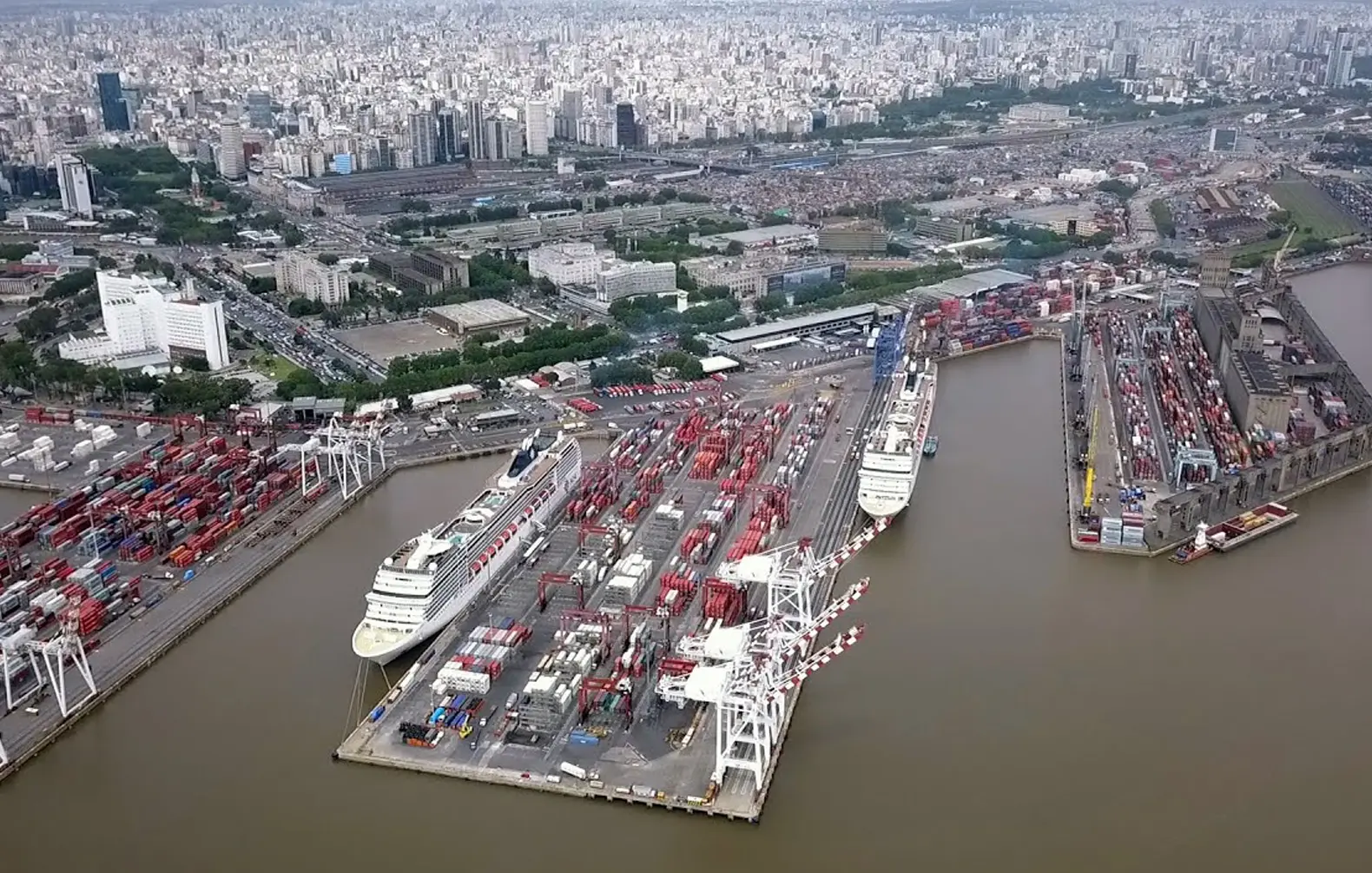
PORT SECURITY IN THE ARGENTINE REPUBLIC
Since the entry into force of the ISPS Code, the Argentine Naval Prefecture has fulfilled the roles of Administration and Designated Authority in order to meet the obligations undertaken by our country as a State Party to the International Convention for the Safety of Life at Sea (SOLAS). Since then, ensuring maritime and port security has become one of the Institution’s strategic objectives.
To this end, it not only had to develop the national technical regulations necessary for the proper implementation of this international instrument in our country, but also had to introduce changes to its organizational structure, such as the incorporation of the ISPS Operational Center within the Directorate of Operations, and the Maritime Protection and Ports Department within the Directorate of Judicial Police, Maritime Protection and Ports.
At present, a total of 106 Port Facilities are certified in our country. These are distributed along the Paraguay–Paraná Waterway, the Río de la Plata, and the maritime coastline. Among the most important ports are the complex comprising the Ports of San Lorenzo–General San Martín and Timbúes (Province of Santa Fe); the Campana–Zárate area in Buenos Aires (also including the Port of Dock Sud); Quequén; and Bahía Blanca.

Beginning in 2013, and as a result of the Argentine Naval Prefecture’s ongoing analysis of maritime and port security, new maritime security requirements were established for all port facilities and other elements of the Argentine Port System that were not covered by the ISPS Code. A process was therefore established whereby these entities could obtain their National Security Document, meaning that they would have a Security Procedures Manual and a person responsible for its implementation, similar to the Security Plan and Port Facility Security Officer (PFSO) required for port facilities. This made it possible to incorporate more than 160 additional elements into the port security system.
The objective was to ensure that all elements comprising our country’s port infrastructure implement appropriate security measures to mitigate the risks of incidents affecting the security of those facilities or of ships interacting with them.
To carry out all these actions, the Argentine Naval Prefecture provides its personnel with training through various courses and refresher programs. At present, it has a staff of more than 100 ship and port facility security auditors, comprising both men and women from the Institution. It is also worth highlighting that, within the regulated sector, an increasing number of women are serving as Port Facility Security Officers, demonstrating the level of integration within Argentina’s port sector, both on the government side and in the public/private sector responsible for operating the various port facilities.
Finally, it is important to mention the active participation of the Argentine Naval Prefecture in various training and refresher events related to maritime security, both nationally and internationally. This allows, on the one hand, personnel performing duties in this field to remain up to date and, on the other, enables appropriate engagement with the sector in order to meet the standards established at the international level, with the ultimate goal of ensuring that ships arriving from other States reach secure port facilities.