
INTERNATIONAL NAIROBI CONVENTION ON THE REMOVAL OF WRECKS
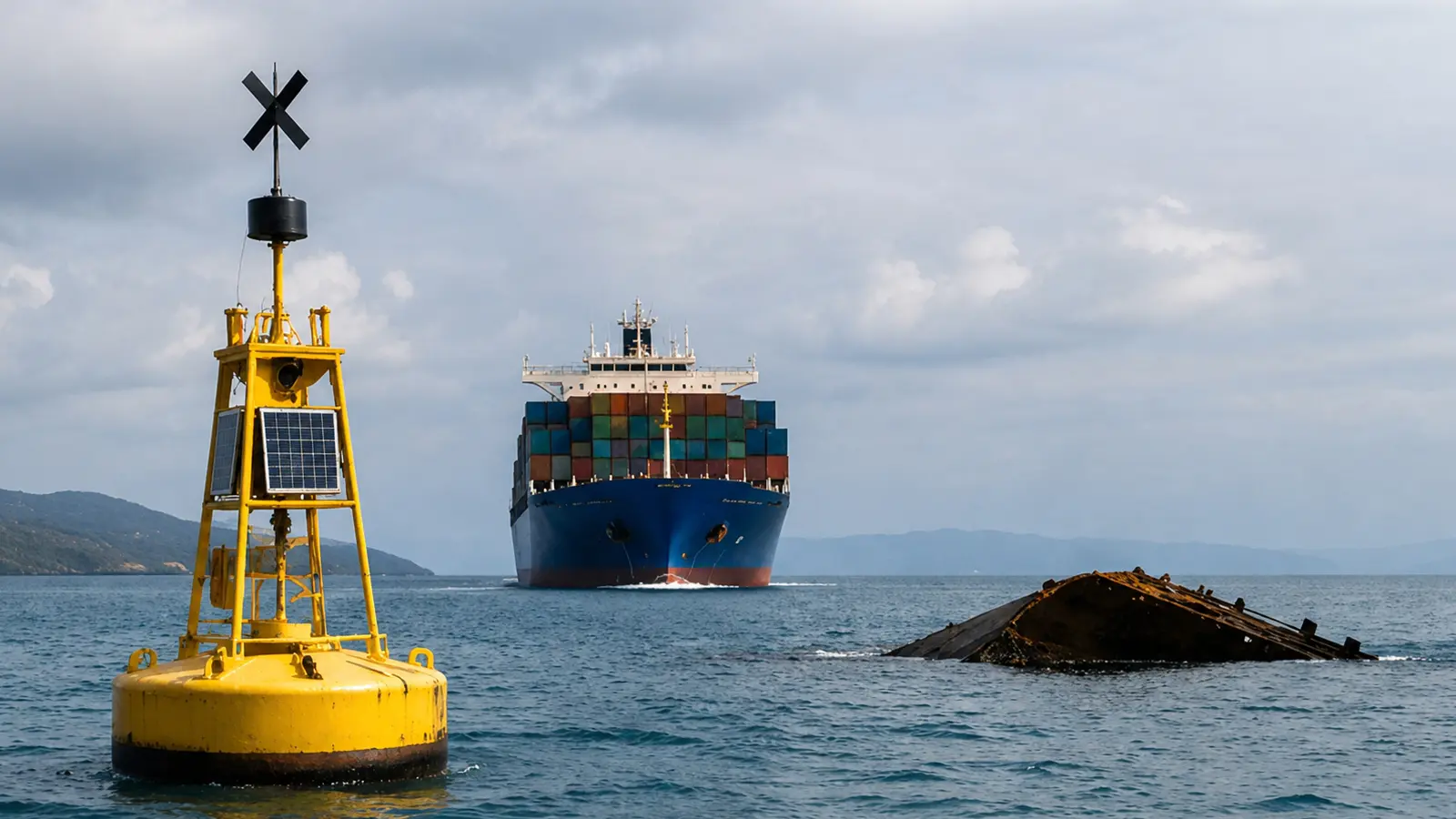
On 18 May 2007, the International Nairobi Convention on the Removal of Wrecks (the “Convention”) was adopted in response to the need to establish uniform international rules and procedures to ensure the prompt and effective removal of wrecks and the payment of compensation for the costs incurred, as well as the fact that wrecks, if not removed, may constitute a hazard to navigation or pose a risk to the marine environment.
The Convention entered into force on 14 April 2015. As of 21 August 2026, there are 78 Contracting States, whose combined merchant fleets account for approximately 84.03% of the gross tonnage of the world merchant fleet.
The Convention applies to wrecks located within the Convention Area (Article 3, paragraph 1). Contracting States may extend its application to wrecks located within their territory, including their territorial sea (Article 3, paragraph 2).
The “Convention Area” is defined as the exclusive economic zone of a State Party established in accordance with international law, or, if such a zone has not been established, an area beyond and adjacent to the territorial sea extending no more than 200 nautical miles from the baselines (see Article 1.1).
The authority granted under the Convention to extend its scope is intended to unify the different national laws governing this matter, as well as to harmonize the legal treatment of wrecks.
A “Maritime Casualty” is defined as: a collision of ships, stranding or other incident of navigation, or other occurrence on board a ship or external to it, resulting in material damage or imminent threat of material damage to a ship or its cargo (see Article 1.3). This definition corresponds to that of “maritime casualty” under Article 221.2 of the United Nations Convention on the Law of the Sea (UNCLOS).
Under the Convention, a “wreck” may, following a maritime casualty, consist of:
a) a sunken or stranded ship; or
b) any part of a sunken or stranded ship, including any object that is or has been on board such a ship; or
c) any object that is lost at sea from a ship and that is stranded, sunken or adrift at sea; or
d) a ship that is about, or may reasonably be expected, to sink or to strand, where effective measures to assist the ship or to ensure the safety of any other property in danger have not already been taken (see Article 1.4).
Likewise, “Hazard” is defined as any condition or threat that:
a) poses a danger or impediment to navigation; or
b) may reasonably be expected to result in major harmful consequences to the marine environment, or damage to the coastline or related interests of one or more States (see Article 1.5).
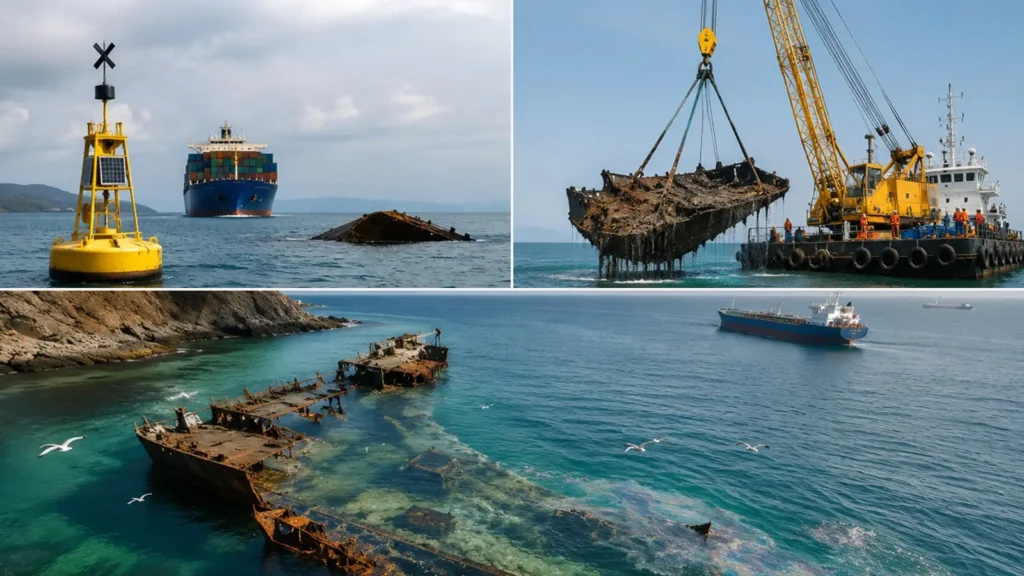
COASTAL STATES AND POLLUTION INCIDENTS
If an accident occurs, the question arises as to what measures a coastal State may take to prevent or reduce pollution originating from a casualty involving a ship near its coast. If the ship is located in the territorial sea, the coastal State may take whatever measures it considers appropriate, subject to the principle of proportionality. This is because the ship would no longer enjoy the right of innocent passage and would therefore be subject to the full sovereignty of the coastal State.
If the ship is located beyond the territorial sea, the situation is different.
Both UNCLOS and the Intervention Convention and its Protocol may apply in cases involving serious pollution damage to the interests of coastal States. However, they do not generally empower coastal States to intervene to remove wrecks beyond the waters adjacent to their territorial seas in situations where:
- there is a danger to navigation rather than a risk of pollution damage; or
- the pollution does not have sufficiently serious harmful consequences.
The new Convention fills this gap. Article 2 of the Convention provides that a State Party may take measures in accordance with the Convention in relation to the removal of a wreck that constitutes a hazard in the Convention Area, according to the definitions set out above.
Therefore, States Parties to the Convention may take measures in response to a situation or threat involving a danger or impediment to navigation, or where there is a reasonable possibility of major harmful consequences to the marine environment, or damage to the coastline or related interests, within the exclusive economic zone or an area beyond and adjacent to the territorial sea extending no more than 200 nautical miles from the baselines.
It may therefore be stated that the Convention expands the powers of coastal States.
Article 9, entitled “Measures to Facilitate the Removal of Wrecks,” provides in paragraph 10 that States Parties consent to the affected State taking action in accordance with paragraphs 4 to 8, where necessary.
Paragraphs 4 to 8 authorize the affected State to establish conditions for and intervene in the removal of the wreck in order to ensure that it is carried out in a manner that takes into account navigational safety and the protection of the marine environment; to set a reasonable deadline for the registered owner to remove the wreck; to remove the wreck if the registered owner fails to do so within the established deadline; and to intervene immediately where the hazard becomes particularly serious.
Article 12 of the Convention establishes obligations for States Parties concerning compulsory insurance or other financial security.
Paragraph 2 of that Article provides that, in the case of a ship that is not registered in a State Party, the certificate may be issued or endorsed by the competent authority of any State Party.
Likewise, paragraph 12 of the same Article provides that each State Party shall ensure that every ship of 300 gross tonnage and above, wherever registered, entering a port in its territory or leaving it, or arriving at or departing from an offshore facility in its territorial sea, is covered by insurance or other financial security in the amount specified in paragraph 1.
In summary, the parties directly affected by the Convention will be the registered owners of:
- Ships of 300 gross tonnage and above;
- Ships registered in a State Party to the Convention; and
- Ships not registered in a State Party that enter or leave a port located in the territory of a State Party, or that arrive at or depart from an offshore facility located in the territorial sea of a State Party.
CONCLUSION
The International Nairobi Convention on the Removal of Wrecks fills an existing gap in the international legal framework by establishing a new legal regime for the effective and prompt removal of wrecks located beyond the territorial sea. With the entry into force of the Convention, an international regime of strict liability came into effect with respect to the costs of locating, marking and removing wrecks.
Consequently, the registered owner of a ship flying the flag of a State Party and having a gross tonnage of 300 or more must maintain compulsory insurance or other financial security to cover the aforementioned costs. The same obligation applies to the registered owners of ships not registered in a State Party that enter or leave a port located in the territory of a State Party, or that arrive at or depart from an offshore facility located in the territorial sea of a State Party.