

CLIMATE REGULATION AND PROSPECTS FOR THE INCLUSION OF MARITIME SUPPORT
1.- INTRODUCTION
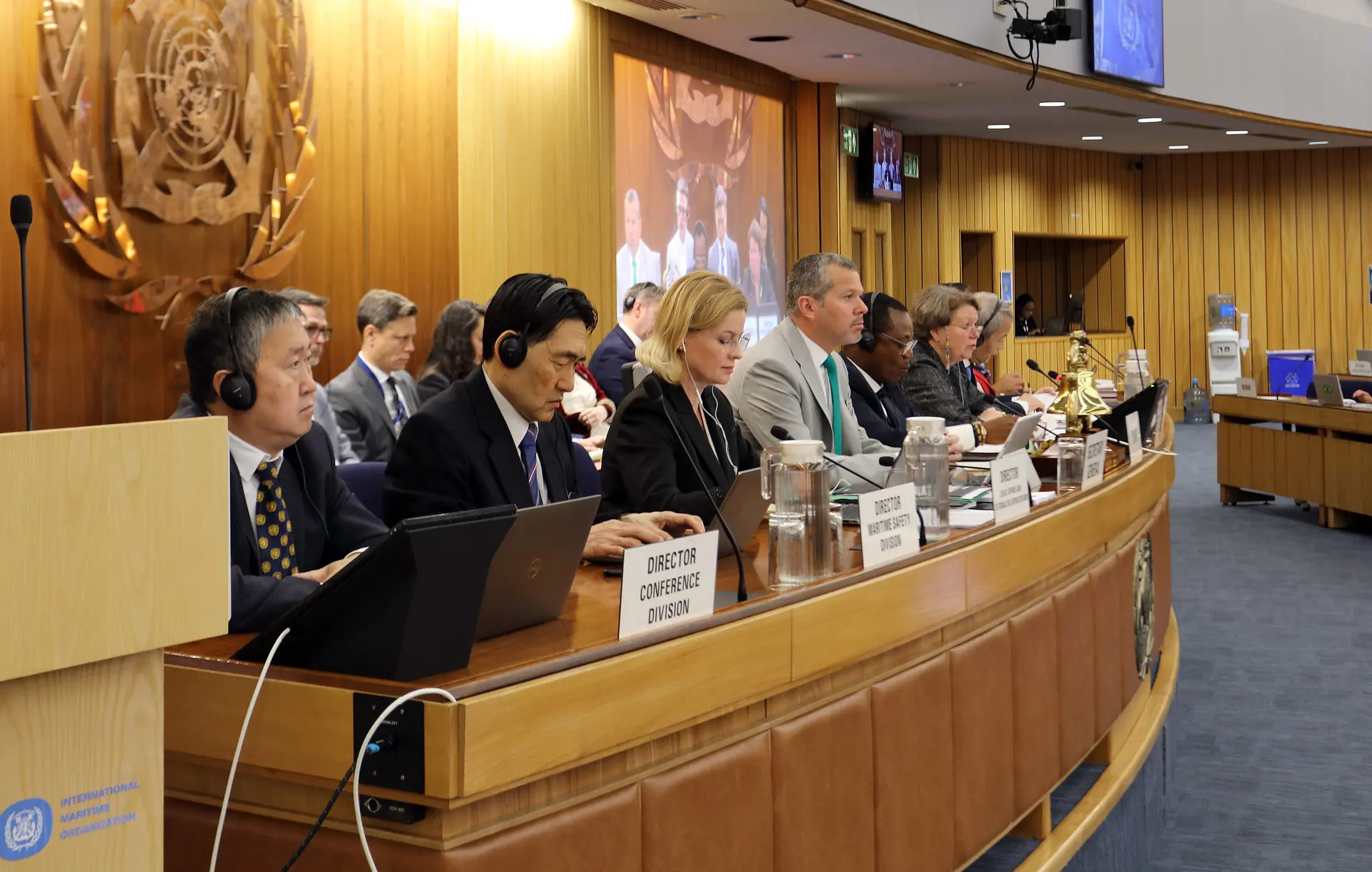
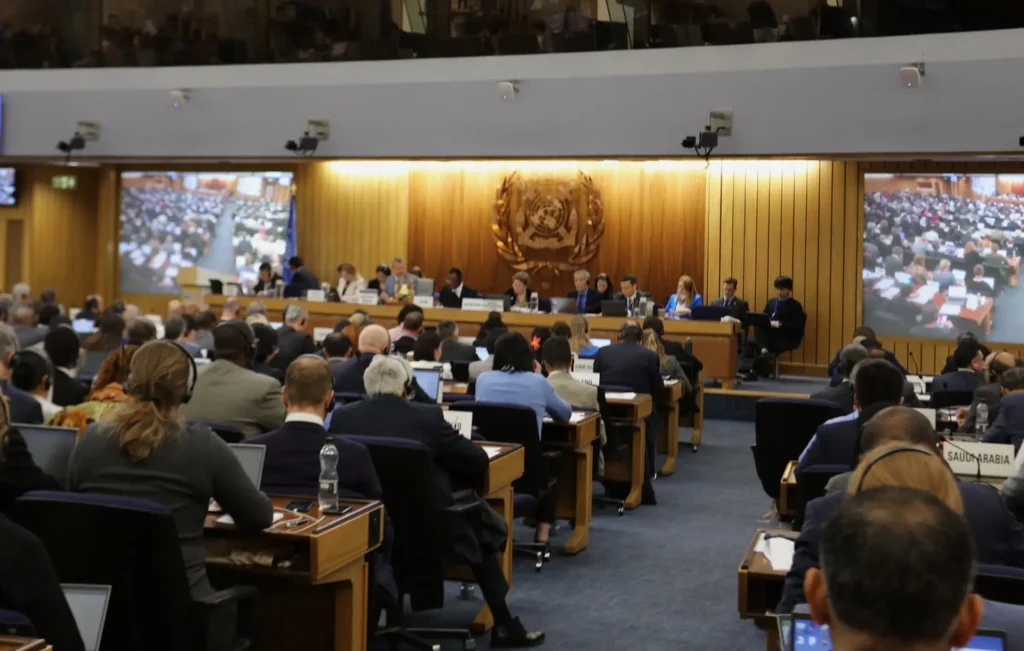
Between March 31 and April 11, 2025, the International Maritime Organization (IMO) held a series of key meetings in London to advance its climate agenda. They were held, in sequence, the 19th Intersectional Meeting on Greenhouse Gas Emissions Reduction (ISWG-GHG 19), the 1st Meeting on Air Pollution and Energy Efficiency (ISWG-APEE 1) and the 83rd Session of the Marine Environment Protection Committee (MEPC 83).
These sessions consolidated the regulatory structure of the new Chapter 5 of Annex VI of the MARPOL Convention, the basis of the IMO Net-Zero Framework, a structure aimed at achieving climate neutrality in international shipping by 2050. Among the main instruments approved, the following stand out:
- A global standard for the carbon intensity of marine fuels (GHG Fuel Intensity Standard – GFI);
- An emissions compensation system using remedial units;
- The creation of the IMO Net-Zero Fund, intended to finance innovation, training, and a just transition.
These obligations initially apply to ships with a gross tonnage of 5,000 or more, but a review of the minimum limit to approximately 400 GT within five years is already planned, which would significantly expand the regulatory scope to smaller vessels, such as many in the maritime support sector.
2.- STRUCTURE OF MEASURES AND TECHNICAL EXPECTATIONS
The preparatory meetings ISWG-GHG 19 and ISWG-APEE 1 addressed the two pillars of the IMO package of measures:
- The technical pillar, which introduces carbon intensity reduction targets based on the well-to-wake methodology;
- The economic pillar, based on mandatory compensation mechanisms for ships that do not meet the targets, with redistribution through the IMO Net-Zero Fund.
MEPC 83 was also expected to define the technical parameters—such as target values and verification methodology—but due to the complexity of the issues, these aspects were postponed to MEPC 84.
3.- FOCUS ON THE ENERGY CONSUMPTION INDEX (ECI)
Since ISWG-GHG 18, held in 2024, the Energy Consumption Index (ECI) has been proposed as a complementary and objective tool for assessing the operational energy efficiency of ships. Its technical design seeks to fill a methodological gap in the mechanisms for validating energy consumption data self-reported by shipowners within the framework of the DCS (Data Collection System).
Although the ECI was formally included on the agenda of MEPC 83 (item 7), there was not enough time for discussion at this session. However, its constant presence in the preparatory meetings reflects the recognition of its regulatory potential and strategic importance for segments such as maritime support, which operate with energy profiles different from those of liner ships.
4.-LIMITATIONS AND PENDING ISSUES
Among the issues that remain open after MEPC 83 are:
- The definition of target reference values (thresholds);
- The parameters for verification and operational compliance of ships;
- Guidelines on the operation and governance of the IMO Net-Zero Fund;
- The technical analysis of the ECI, still pending but included in future agendas.
These issues will be addressed at MEPC 84, scheduled for the first half of 2026.
5.- NEXT STEPS
The approved timetable establishes that:
- The text of Chapter 5 will be formally adopted in October 2025, during the extraordinary session MEPC/ES.2;
- Its entry into force is scheduled for 2027;
- The technical regulations will be finalized at MEPC 84, including guidelines for implementation, verification, and compliance.
6.- CONCLUSION
The sessions analyzed represent a crucial moment in the IMO’s regulatory trajectory toward climate neutrality. Although the initial scope of the measures is limited to larger vessels, the development of Chapter 5 projects a future with greater inclusion of support and coastal vessels, sectors that play a key role in global maritime logistics.
Tools such as the ECI become important in this context, as they offer metrics adapted to diverse operational realities, especially in regions with heterogeneous fleets. Technical recognition of this type of proposal can contribute to a more just, viable, and technically sound energy transition.
7.- BIBLIOGRAPHICAL REFERENCES
- INTERNATIONAL MARITIME ORGANIZATION (IMO). MEPC 83/WP.1/Rev.1 – Draft Report of the Marine Environment Protection Committee on its 83rd Session. 2025.
- IMO. PREVIEW: Marine Environment Protection Committee, 83rd session (MEPC 83), April 7–11, 2025.
Available at: https://www.imo.org/ - IMO. MEPC 83/1/1 – Annotations to the provisional agenda and timetable. 2025.