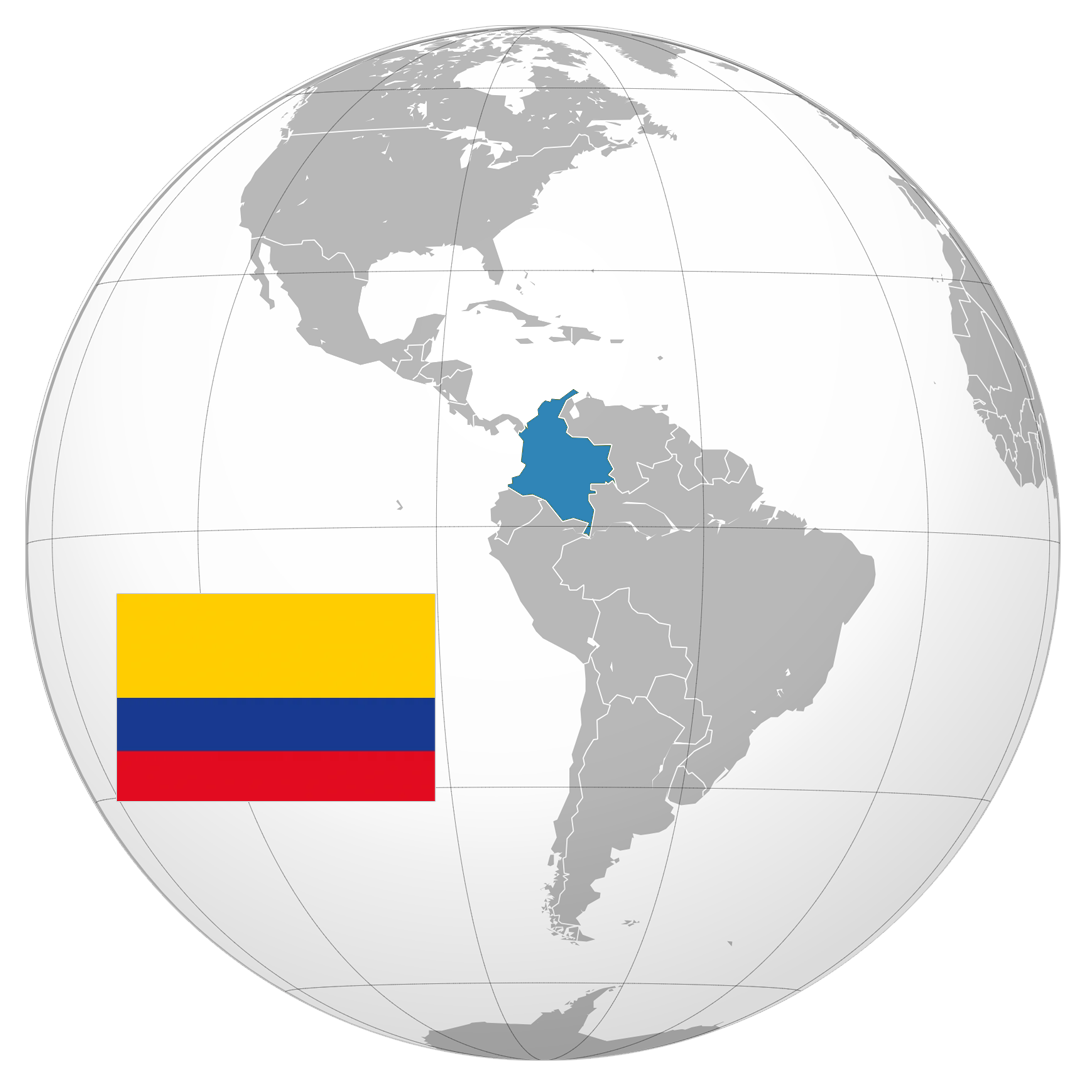

Colombia has a territorial extension of approximately 2,070,408 km², of which 55.15% corresponds to continental and insular land, and 44.85% to maritime territory. It is the only country in South America with a coastline on the Pacific Ocean and access to the Atlantic through the Caribbean Sea, giving it a privileged position in geopolitical, geoeconomic, and geoenvironmental terms. This allows the country to use the oceans as a strategic national asset for research and economic growth through its 15 seaports, which handle more than 195 million tons annually on average, as well as through the sustainable use of biodiversity and marine resources.
Colombia has 2,900 kilometers of coastline, plus the Archipelago of San Andrés, Providencia, and Santa Catalina, which includes the Seaflower Biosphere Reserve, recognized by UNESCO. It also has maritime and river borders with nine countries, notably its proximity to the interoceanic Panama Canal. This gives the country connectivity with more than 7,000 seaports worldwide, access to 60% of shared high-seas ocean spaces, and active participation in the development of scientific knowledge about Antarctica alongside 53 other nations.
Maritime and port activities are under the responsibility of the General Maritime Directorate (DIMAR).