
#WomanInMaritimeDay: RED MAMLa HIGHLIGHTS DECARBONIZATION AND DIGITALIZATION
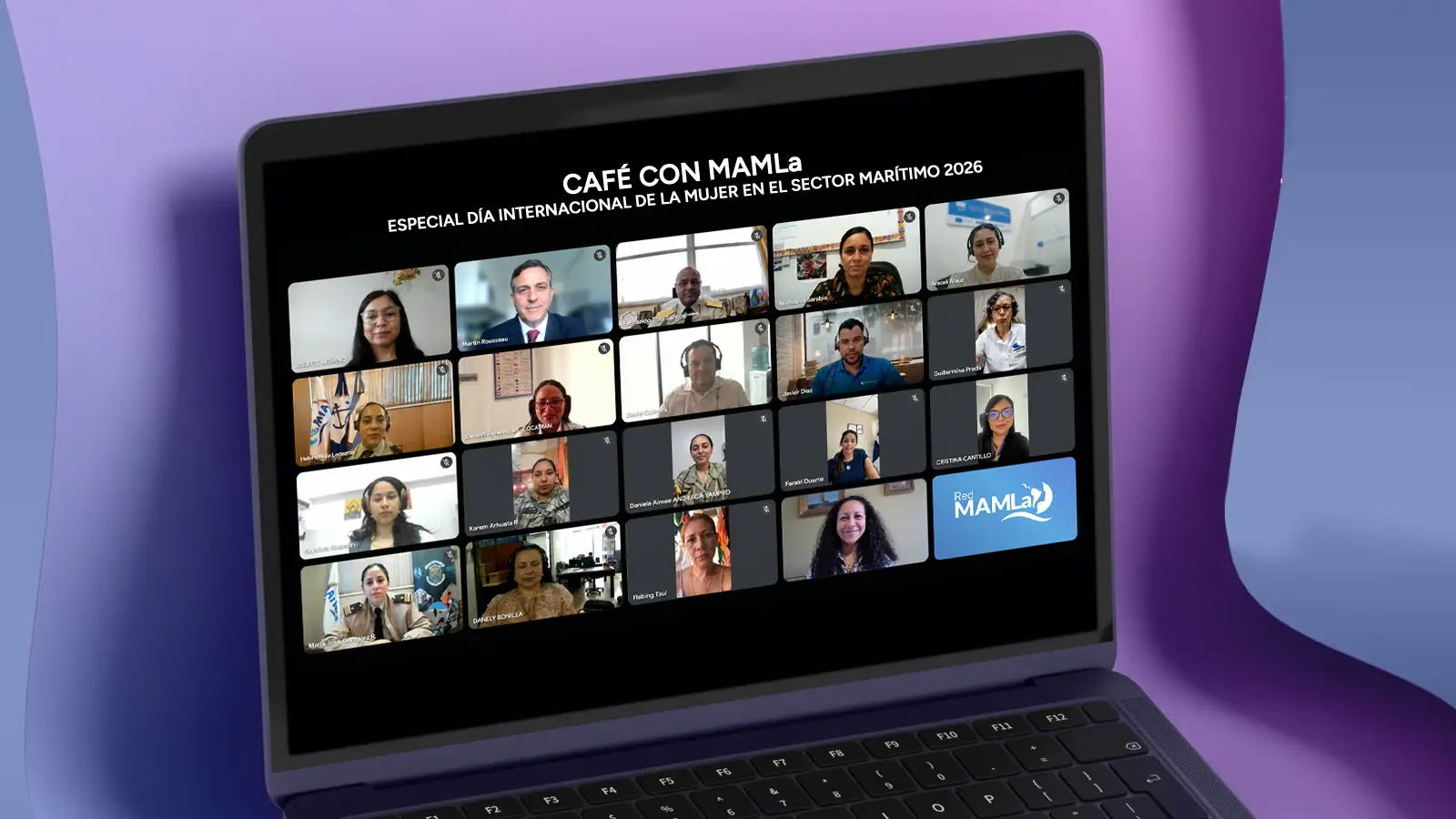
As part of the commemoration of the International Day for Women in Maritime, the Network of Women of Maritime Authorities in Latin America (MAMLa Network) held a new edition of its dialogue series, “Coffee with MAMLa,” on 28 May 2026, under the theme: “The Role of Women in the Decarbonization and Digitalization of the Maritime Sector.”
The event brought together distinguished experts from the international maritime community, providing a forum for technical exchange and reflection on two of the industry’s most significant transformations: the transition toward more sustainable operations and the increasing digitalization of maritime processes.
The event was opened by Dayanis Escorcia, Director of the MAMLa Network Communications Committee, who welcomed participants and highlighted the importance of these dialogue sessions within the International Maritime Organization’s (IMO) commemorative agenda.
The President of the MAMLa Network, Magdalena Santos, then delivered the official opening remarks, emphasizing the IMO’s 2026 theme: “From Policy to Practice: Advancing Gender Equality for Maritime Excellence.” In her address, she stressed the need for women to play an active role in the sector’s ongoing transformation, particularly in areas such as decarbonization, digitalization, and cybersecurity.
The first technical session focused on digitalization and cybersecurity, featuring a presentation by Engineer Martín Rousseaux, who examined the key challenges and risks associated with protecting data and information systems in the maritime industry. During his presentation, he underscored the importance of governance, risk management, and continuous training as fundamental pillars for ensuring information security in an increasingly interconnected environment.
The session also highlighted the impact of cybersecurity not only on data protection but also on operational sustainability, institutional reputation, and the competitiveness of the maritime sector. The discussion concluded with a question-and-answer session that explored topics including data interoperability, technical certifications, and the role of women in strategic areas of digital security.
The second technical session addressed the decarbonization of the maritime sector, with presentations by Aricel Araúz of the Maritime Technology Cooperation Centre for Latin America (MTCC-LA) and Chief Officer Melisa Daniela Marino of the Argentine Coast Guard (Prefectura Naval Argentina).
The speakers examined the technical and operational challenges involved in the transition to alternative fuels, improving energy efficiency, and meeting international environmental commitments, particularly under the MARPOL Convention. They also emphasized the role of digitalization as a key tool for optimizing voyage planning, reducing emissions, and enhancing port efficiency.
During the panel discussion, participants reflected on the challenges women face in leading innovation and transformation within a traditionally male-dominated sector, reaffirming the importance of strengthening women’s technical expertise and expanding their participation in decision-making processes.
The event concluded with a message of appreciation to the speakers and participants, reaffirming the MAMLa Network’s commitment to promoting opportunities for training, visibility, and women’s leadership in the maritime sector.
Through initiatives such as “Coffee with MAMLa,” the Network continues to strengthen its position as a key regional platform for advancing gender equality, supporting the professional development of women, and fostering a more sustainable, inclusive, and resilient maritime sector.